

He who always lives to make intercession for them.
Hebrews 7:25 | LSB
Process
What is the Father highlighting
The Trust: Ask the Holy Spirit to bring to mind God’s one or two of the 10 commands or a specific experience you had with Him. Write down only the ones that stand out. Then ask, “What does this tell me about God’s character?” Listen for His response, and write down these specific character traits of God.
The Complaint: Focus on a current crisis or challenge in your life that makes it hard to see or believe those specific traits of God.
The Address: Choose a title or name for God that connects with the character traits you wrote down (for example: Father, Lord, Friend, or Protector).
The Deliverance: Connect God’s character traits directly to your current crisis. Ask Him to bring those specific qualities into your situation.
The Praise: End with a declaration of faith, thanking God for who He is to you right now and who He promises to be in your future.
Craft the Psalm
Fill out the following sections with the information you received from the Holy Spirit.
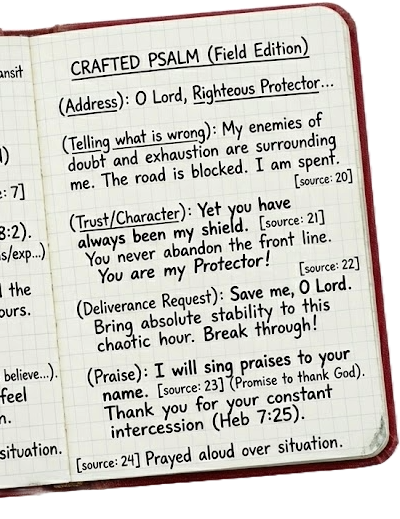
The Address: Directly calling out to God (”O Lord...”, “My God...”, “Our Father…”, etc.).
The Complaint: Telling God exactly what is wrong (”My enemies are surrounding me… “I am exhausted…”, “I am tormented…”, etc. ).
The Trust: Remembering the past or a character of God to help to build confidence (”Yet you have always been my shield”, “You supply all my needs”, etc.).
The Deliverance Request: Asking for specific help (”Save me,” “Listen to my prayer”, etc.).
The Praise: Ending with a promise to thank God once the crisis is over (”I will sing praises to your name”, etc.).
Pray the Psalm out loud
Take time to adjust the flow of the text so that it’s easy to pray, easy to read. Then pray it out loud over yourself. You are praying the very words of God over your life.